What to Expect:
An Introduction to Church Etiquette
Entering the Church
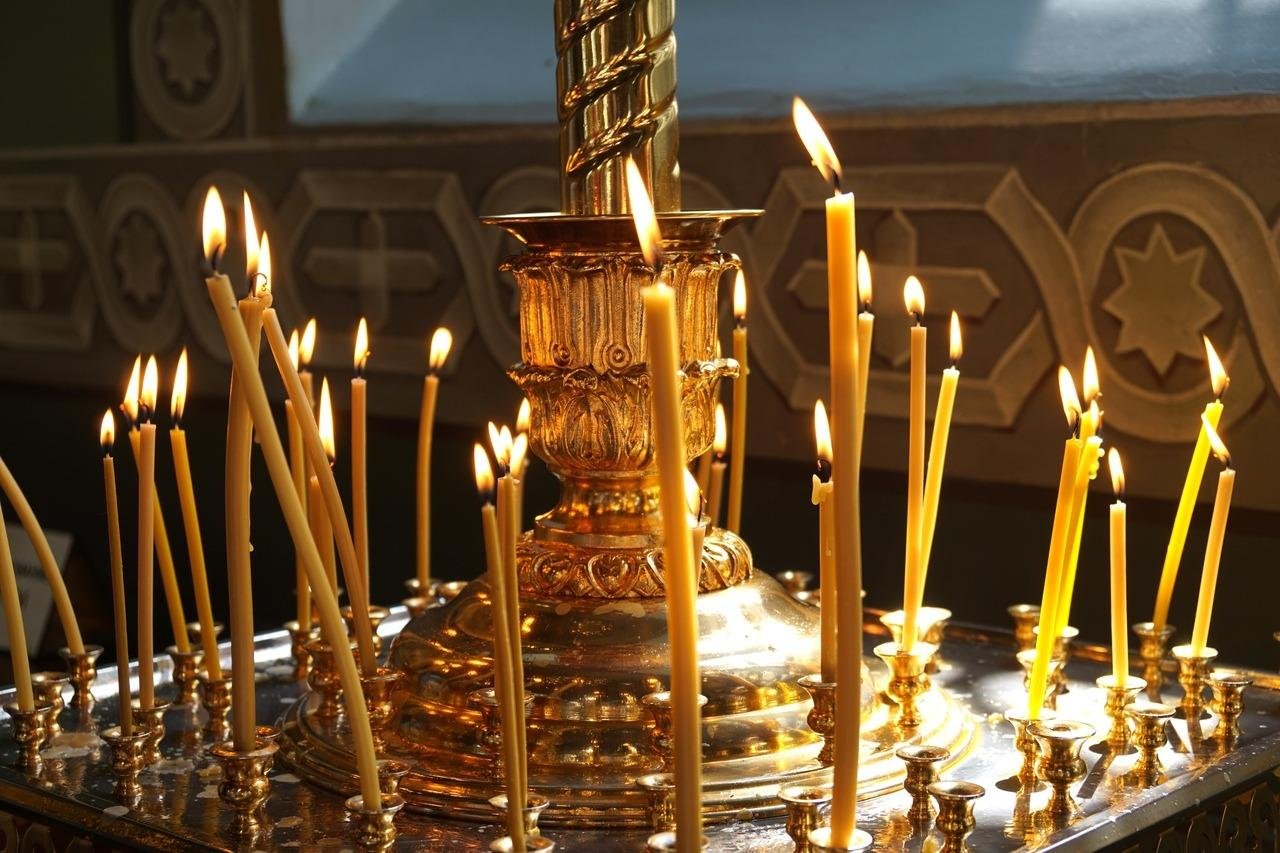
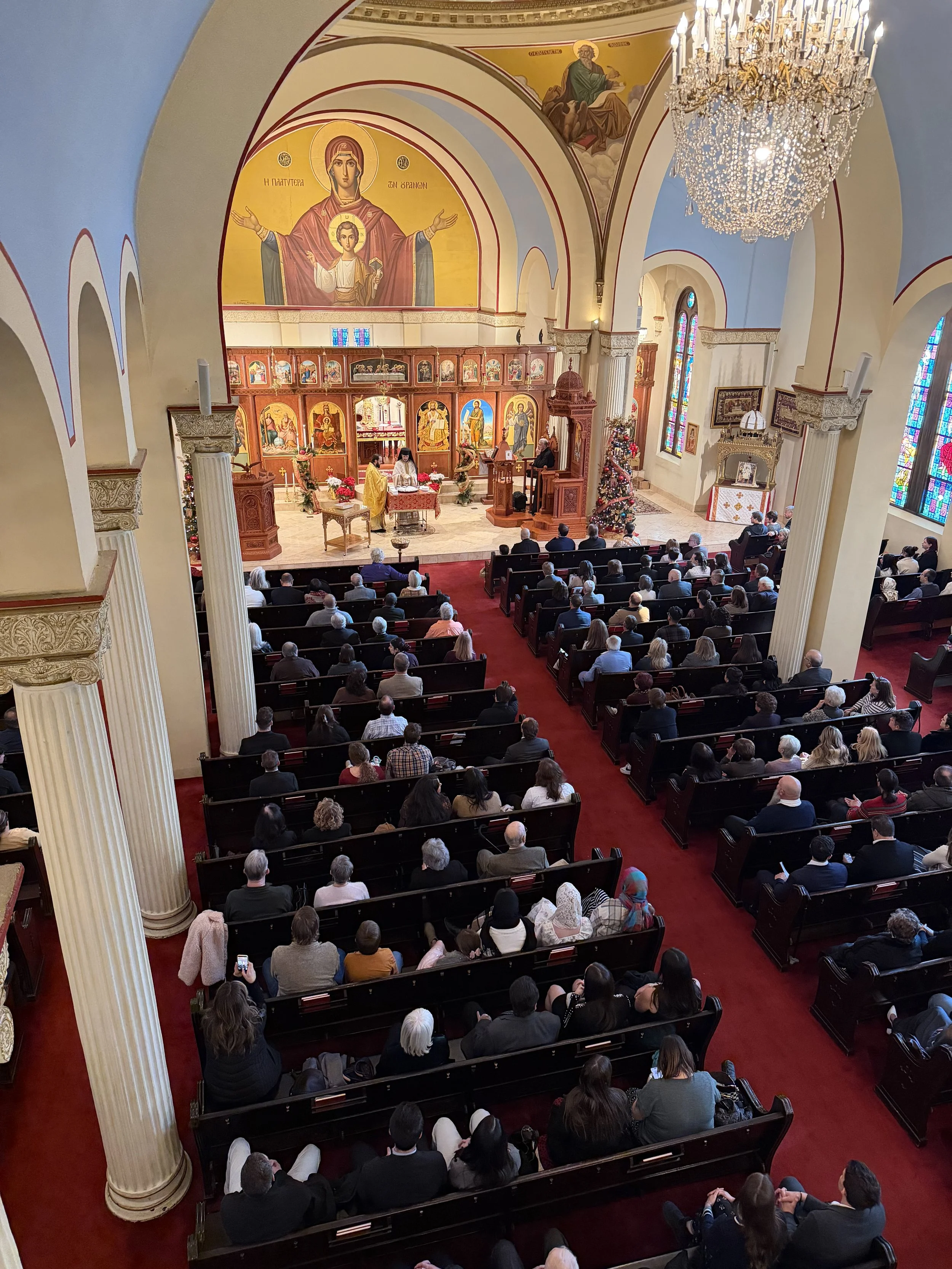
We extend a warm and heartfelt welcome to all who visit our parish for worship. As you enter the narthex, you are invited to light a candle and set aside the cares of this world, preparing your heart as you step into the nave (sanctuary) to worship our Lord and Creator.
The services of Great Vespers, Orthros, and the Divine Liturgy may seem unfamiliar or lengthy to those new to the Orthodox Christian tradition. We encourage you to participate by observing, listening, and prayerfully immersing yourself in the beauty of the ancient services, which engage both body and soul. Together, we offer worship to our Lord and Savior, Jesus Christ.
Our children worship with us. If you have young children, they are welcome here, too. If you need to step to the back of the Church, or enter into the quiet room with your child for any reason, you are not disturbing us. We expect Christian children to be raised in the Church; to do that, they must be part of the body of the Church.
Holy Eucharist (Communion)
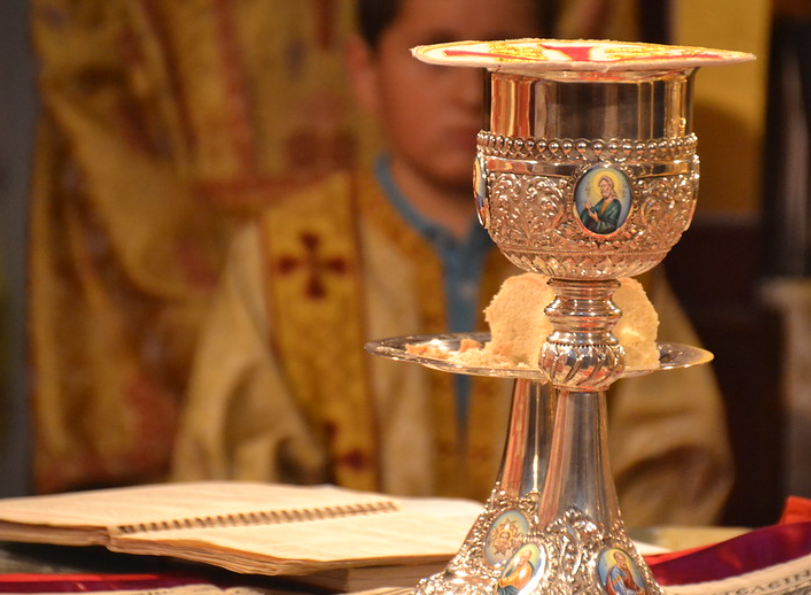
The Holy Eucharist (Communion) is reserved for baptized Orthodox Christians who have prepared themselves through prayer, fasting, and recent confession. However, all are invited to come forward at the conclusion of the Divine Liturgy to receive a blessing and a piece of antidoron—blessed bread given “instead of the Gifts.” If you would like to receive a blessing during the distribution of Holy Communion, you may approach the priest with your arms crossed over your chest as a sign of reverence, and introduce yourself to Fr. George, or Fr. Simeon.
When to Enter the Nave/Sanctuary
In an Orthodox Christian service, there generally isn’t a universal rule that forbids entering at specific moments, but traditionally, people avoid entering during especially solemn parts of the Divine Liturgy.
Commonly avoided moments include:
The Little Entrance
The Gospel reading
“Peace be unto all” — when the priest turns toward the congregation to give the blessing.
The Great Entrance (especially important to avoid interrupting)
The Creed
The Lord’s Prayer
The Anaphora/Eucharistic Prayer, particularly from “Let us stand aright…” through the consecration
The Communion prayers / Communion — particularly while the priest is administering Communion.
During these solemn moments, Parish Council members in the Narthex may temporarily pause entry into the Nave and will be available to assist or answer any questions you may have.
Proper Attire
As we draw closer to Christ, Our God, by entering His Holy-dwelling place, we should dress not only our souls but our bodies as well, which should be in a manner befitting being in the presence of His majesty and glory. Our clothing should always reflect the dignity of being created in His likeness and image. Our attire should, therefore, be modest and respectful. Women should attend services with their shoulders covered and wearing slacks or skirts of appropriate length. They may cover their heads, if they’d like, but not necessary. Men should wear long pants and either a collared shirt or a dress shirt with a tie. It is not appropriate to wear sneakers or casual sandals.
Please note, that we also ask men and women to not cross their legs during the Divine Liturgy. In the Divine Liturgy, the body is seen as participating in prayer. Standing attentively—with feet planted and posture upright—is a sign of respect before God. Crossing legs can come across (rightly or wrongly) as casual, relaxed, or even dismissive in that sacred setting. We also ask women to refrain from wearing lipstick so as not to leave marks on the icons, and the spoon used for the Holy Eucharist.
Departing the Church
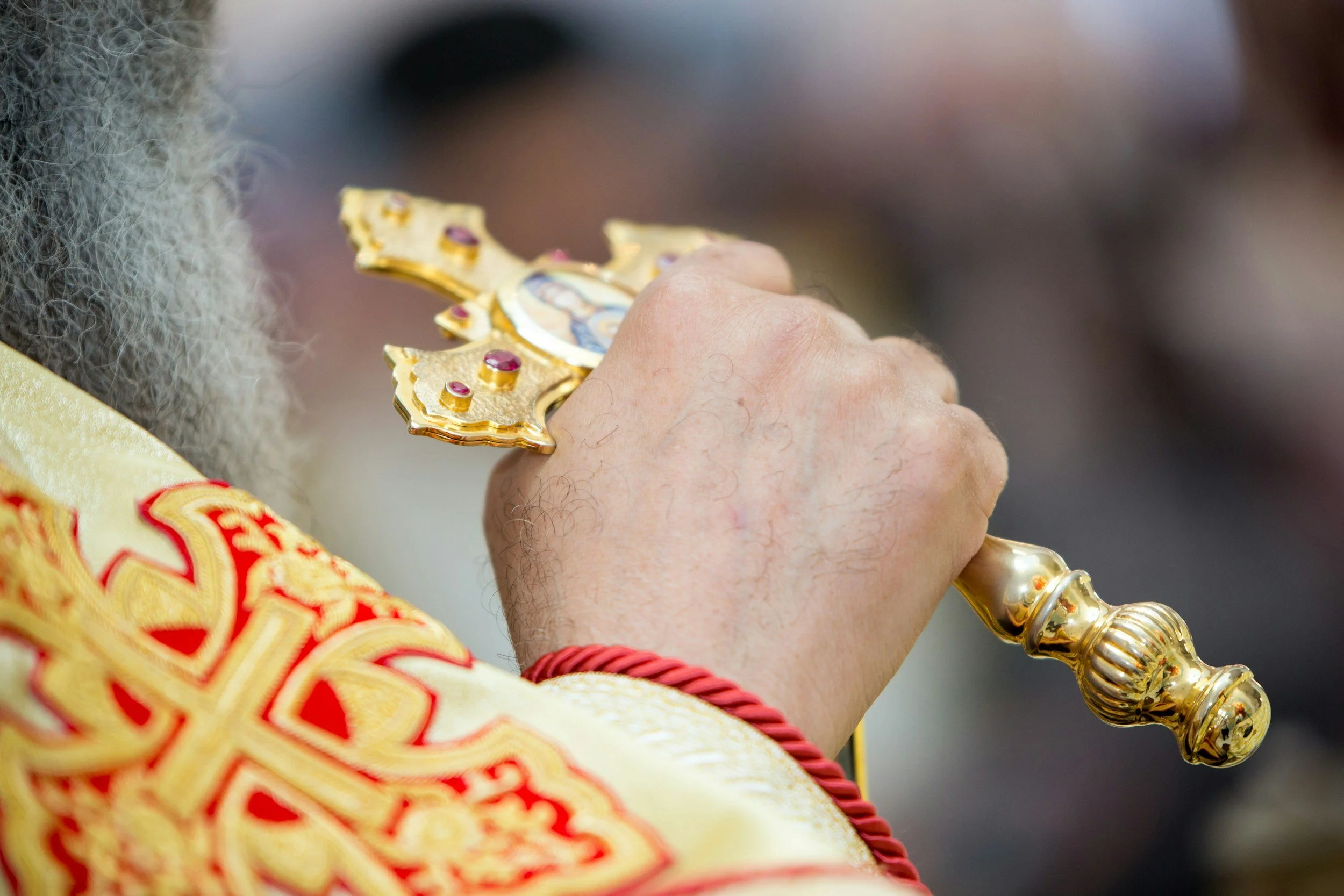
It is appropriate to leave the Nave (Sanctuary) respectfully. At the close of services, the faithful should approach the priest as guided by the ushers, kiss, or venerate the hand of the priest while receiving the antidoron (blessed bread). After walking to the back of the nave, it is customary to turn toward the Holy Altar, bow, and make the sign of the cross.
General Conduct During Services
In addition, please remember to
Silence your cell phone and avoid taking unnecessary pictures.
Stand attentively, if you are able, during prayers and hymns and follow along with the service when possible.
Avoid talking, eating (other than Holy Communion if you are able to receive, Antidoron and Artoklasia), chewing gum, or any unnecessary movements.
If your child becomes restless or needs a moment away from the service, a Quiet Room is available at both churches where you are welcome to take your child until they are ready to return to the sanctuary.
To help maintain a reverent and prayerful atmosphere, please ensure any toy or activity brought to church are quiet.
For more information, or a general sense of what else to expect, please reference this article 12 Things I Wish I Had Known by Frederica Mathews-Greene